Why romance novels are booming from page to screen
As romance novels jump from bestseller lists to streaming screens, diverse love stories are reshaping the genre’s cultural reputation.
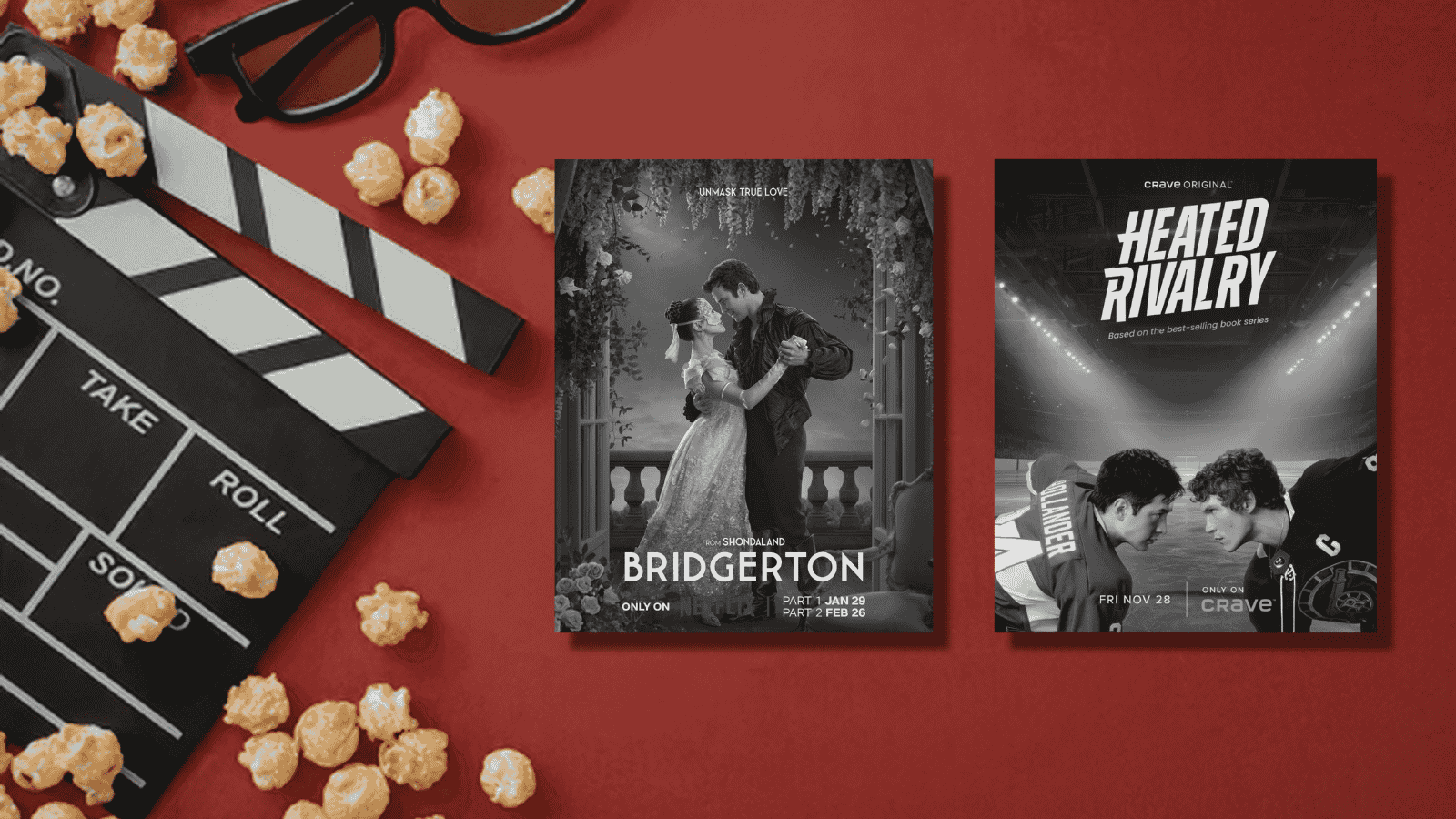
Romance adaptations like Bridgerton are bringing bestselling love stories to the screen, reflecting the genre’s growing cultural and commercial influence (Graphic by Vanessa Santos/MMJC News)
Romance novels are no longer confined to paperback shelves. From Bridgerton to Heated Rivalry, a growing number of bestselling love stories are being adapted for film and television—bringing new audiences to a genre long dismissed as a “guilty pleasure” and prompting a broader reassessment of its cultural influence.
The surge in romance adaptations reflects a broader shift in how the genre is produced, marketed and consumed. Once confined largely to mass-market paperbacks, romance is now a key part of the entertainment industry’s adaptation pipeline, driven by strong book sales, online communities like BookTok and growing demand for more diverse and socially conscious storytelling. For readers, writers and critics, this moment raises a larger question: is romance finally being taken seriously, or simply being recognized as a profitable genre all along?
The page-to-screen pipeline
According to a 2022 WordsRated report, romance was the highest-earning genre of fiction, having amassed nearly $1.5 billion in revenue in the U.S. By 2025, romance remains at the top with 51 million novels being sold within a year.
Professor Jodi McAlister, researcher of popular romance and cultural studies at Deakin University, credits the current surge of film and television adaptations to two things: visibility and money.
“I don’t know if romance fiction has changed in a way which makes it intrinsically more adaptable, says McAlister. “Rather, the landscape has changed in a way which has caused more people to take it seriously.”
While the profitably of romance is nothing new, McAlister notes that the genre’s online readership has become increasingly visible on social media. Nearly 77 million posts can be found under hashtag “BookTok.” Paired with a handful of high-profile adaptations like Outlander, Bridgerton and Heated Rivalry, this marks an unprecedent cross-media moment in the literary sphere.
“Romance was and kind of had always been the top selling genre,” says Jenny Holiday, author of contemporary and Regency romance. “But it kind of operated, to my mind, like a secret society. It was the top selling genre, but it wasn't all over the place like you see today.”
Holiday states that adaptation pipeline may be narrow, it’s steadily growing. “Once things are successful, whether it's books, adaptations […] people try to copy success.”
How is romance storytelling changing?
While the current boom in romance adaptations may feel new, scholars and writers say the genre itself has always engaged with questions of identity, power and relationships.
“Romance has always explored those things, but perhaps less explicitly,” said Holiday, noting that contemporary stories reflect a broader cultural shift toward more open discussions of gender, sexuality and social norms.
That shift is also visible in the kinds of stories gaining traction with readers. Once defined by relatively formulaic narratives, modern romance now spans a wide range of subgenres—from fantasy “romantasy” to queer and dark romance—offering more space for diverse characters and relationships.
At the same time, these stories are reaching audiences that extend beyond the genre’s traditional readership. Lauren Hughes, a local online bookseller and founder of Birdie’s Bookshop, said she has seen growing demand for romance that reflects different identities and experiences.
“We’re seeing these stories that are multifaceted and layered,” Hughes said. “It’s so much bigger than what people think it is.”
For many readers, that evolution is part of what makes the genre resonate now. In an increasingly uncertain cultural and political climate, romance fiction offers not just escapism, but a way to explore relationships, identity and emotional connection in a more expansive and inclusive way.
Readers are driving the romance fiction boom
The surge in romance storytelling isn’t just happening on screens and bestseller lists; it’s being driven by readers on the ground.
For booksellers like Hughes, that demand is visible in how readers are discovering and engaging with the genre. While platforms like BookTok have helped popularize romance globally, Hughes says much of her own sales are driven through Instagram, where readers connect directly with authors, influencers and one another.
That shift has also changed who is buying romance and how. Hughes says her customer base includes a growing mix of readers across age groups, from younger audiences discovering the genre online to older readers returning to it with new interest. At the same time, niche subgenres are carving out dedicated followings, allowing readers to seek out stories that align more closely with their specific interests.
For many, the appeal is deeply personal. “People are wanting to feel their feelings,” Hughes said, describing a growing interest in stories that offer emotional depth alongside familiar narrative payoffs.
“It’s so much bigger than what people think it is.”
Is this cultural change, or just business?
The surge in romance storytelling has also raised questions about what’s really driving its popularity.
For some, the current boom reflects a broader cultural shift, one in which stories centred on relationships, identity and emotion are reaching wider audiences than before. But others suggest the rise of romance may be just as closely tied to the industry’s tendency to follow what sells.
The relationship between culture and commerce is less straightforward. In Holiday’s perspective as an author, the current boom reflects a “chicken and egg” dynamic, where audience demand and industry investment continuously reinforce one another.
“What is market demand in this case, but a reflection of the kinds of cultural properties people want?” Holiday said.
That cycle has helped push romance further into the mainstream, even as debate continues over whether the genre’s rising visibility reflects a genuine cultural shift—or simply a growing recognition of its commercial value.
Why romance stories matter more than ever
For readers and writers alike, however, the significance of romance storytelling extends beyond industry trends.
In times of uncertainty, the genre’s promise of emotional resolution can offer a sense of stability. McAlister notes that romance’s resurgence coincided with the COVID-19 pandemic, a period when many readers turned to stories that guaranteed a hopeful ending.
For Holiday, the appeal lies in something deeper. Romance stories, she said, are not just about fantasy, but about “human potential, “offering narratives of growth, connection and fulfillment that resonate across audiences.
That emotional pull is reflected on the ground as well. “People are wanting to feel their feelings,” said Lauren Hughes, a local bookseller, describing a growing desire for stories that allow readers to see themselves and their relationships more clearly.
As romance continues to move from page to screen and into the cultural mainstream, its enduring appeal may lie in that balance—between comfort and complexity, escapism and reflection—offering audiences not just a happy ending, but new ways of understanding themselves and others.
Post a comment